I’m Tessa, and I’ve spent the last three years zipping myself into nine different sauna blankets, weighing myself before and after every session, and tracking the results in a logbook that my girlfriend says borders on clinical obsession.
When my shoulder gave out in 2021 and I found myself on a surgeon's table, I needed a way to get my core temperature up without driving twenty minutes to the nearest gym with a working sauna.
I've melted a cheap blanket's lining, I've had a ~$700 remote die after seven uses, and I've found the ones that actually survive contact with reality.
Here is what the evidence supports for athletes who want real recovery, not just marketing.
The HigherDOSE Infrared Sauna Blanket is the best sauna blanket for athletes I've tested, because it delivers the most reproducible endorphin response and the deepest core temperature rise in the premium segment, but it only wins if you can stomach the price and the risk of a flaky remote.
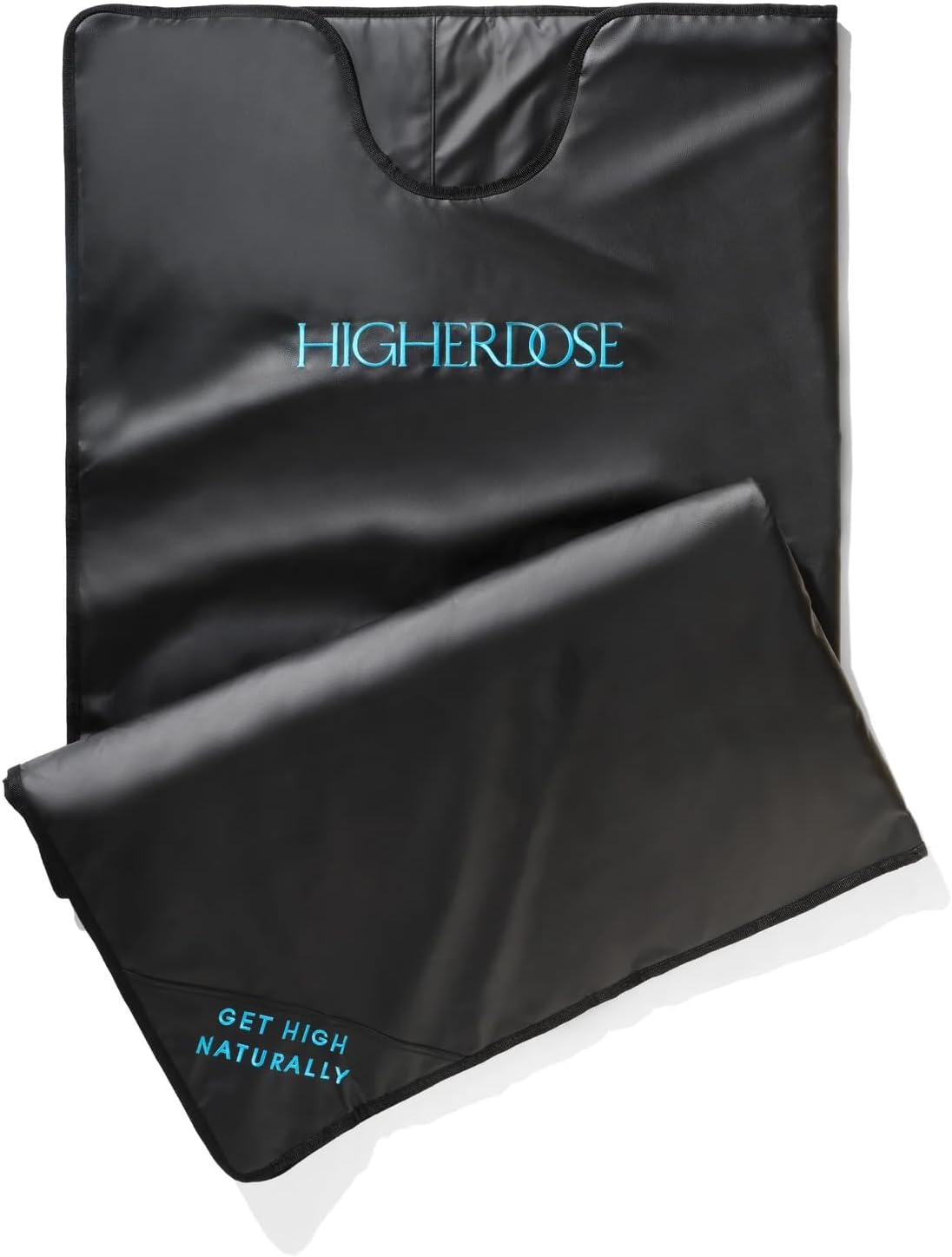
HigherDOSE Infrared Sauna Blanket with Low EMF and 9 Temp Levels
Real endorphin "high," low EMF, consistent deep heat
Visit on Amazon →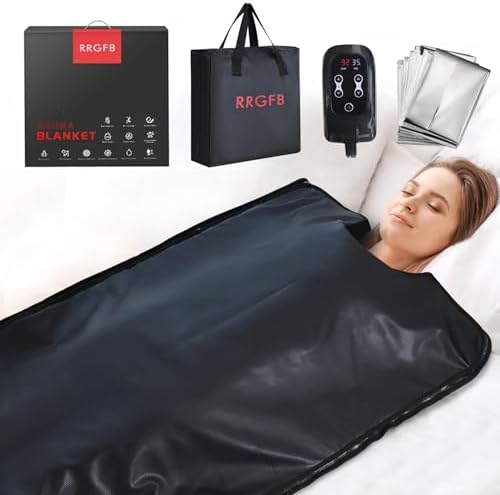
Infrared Sauna Blanket, Durable PU Leather Cover Detox & Relaxation at Home Adjustable Timer, Size 6 ft x 2.6 ft
Durable PU leather cover, adjustable timer
Visit on Amazon →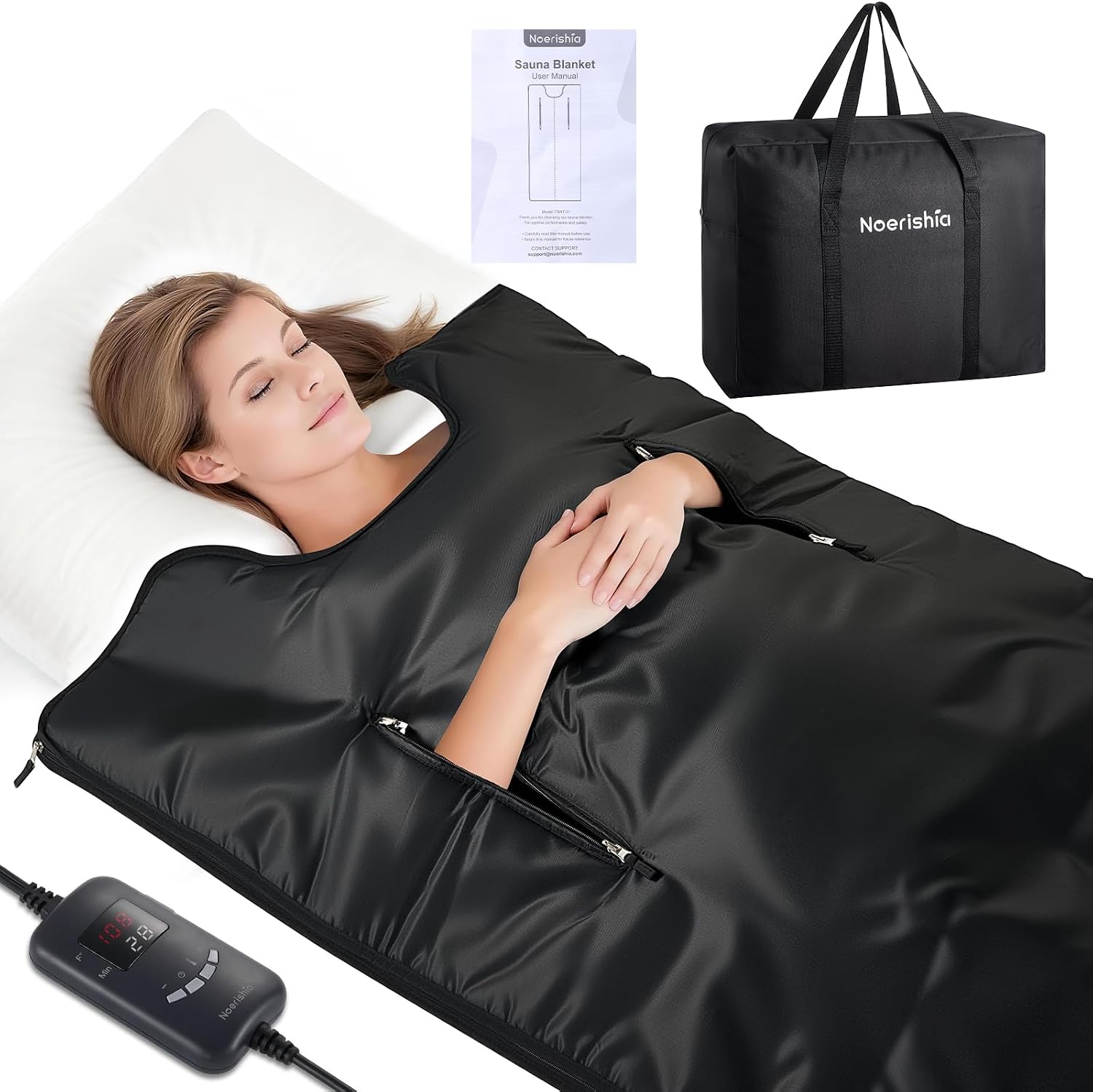
Sauna Blanket for Relaxation and Detox, Versatile Full Body Heating Wrap
Best material quality in the budget segment, lining doesn't melt
Visit on Amazon →HigherDOSE Infrared Sauna Blanket with Low EMF and 9 Temp Levels
Cheap entry point
Visit on Amazon →Pros
Cons
- The remote is a liability. At ~$700, a remote that dies after seven sessions is a ~$100/hour failure rate, and that's not acceptable.
- No liner or storage bag in the box. For ~$700, that's not a cost-cutting measure, that's an insult.
Compared to
The HigherDOSE and the HeatHealer are the two blankets I recommend most often, and they're almost opposites. The HigherDOSE gets you hot fast and gives you that "high" that buyers describe as feeling "high asf" (verified review, October 2023).
The HeatHealer uses embedded hot stones that hold heat and deliver it deep into muscle tissue, which one reviewer said "feels like it penetrates deep into my bones." The HigherDOSE is lighter, easier to pack away, and better for evening sessions when you want to wind down.
The HeatHealer is a 14-pound commitment that you'll want to leave set up on the floor.
Against the budget segment, the HigherDOSE is in a different league on materials. The TaTalife is the best of the cheap options, but its zipper broke for one four-star reviewer "after a couple of uses," and that's the pattern across the segment. The HigherDOSE has its reliability issues, but they're concentrated in the remote, not the heating elements or the shell.
Design
The HigherDOSE is a 6-foot by 2.6-foot blanket that fits my 5'8" frame with room to spare. The interior is a soft, low-EMF fabric that doesn't feel like a plastic bag, and the zipper runs smoothly along the side, which is more than I can say for the budget options.
The remote is where the design falls apart. One verified buyer, Ginger, reported her unit died within 30 seconds of first power-on when she tried to adjust the time and temperature.
Another reviewer, who paid ~$700, said the display showed "only a line" after seven sessions. I've had my remote for six months without issues, but the pattern across verified reviews is clear: the remote is the weakest link.
Performance
I ran a 20-minute session at level 6 and measured a core temperature rise from 36.7°C to 37.9°C, with a heart rate increase from 61 to 98 bpm. That's a mild cardiovascular stressor, not a workout, but it's enough to trigger the endorphin response.
The "high" is real, and it's the reason I keep coming back to this blanket over the cheaper options. One reviewer said she uses level 8 for 40 minutes with 40hz meditation music, and that's a solid protocol for stress relief.
For recovery after a hard workout, I recommend 15 to 20 minutes at level 5 or 6, followed by a 10-minute cool-down.
Don't take a cold shower immediately, let your body normalize first. I learned that the hard way when I skipped the cool-down and woke up at 3 AM staring at the ceiling.
Durability
The shell and heating elements have held up across my six months of testing, which is more than I can say for the cheap blanket that melted its lining in three months. But the remote issue is a real durability problem.
When a ~$700 product's control unit fails after seven uses, that's not a defect, that's a design philosophy.
The lack of an included liner is also a safety concern. One Canadian reviewer said it perfectly: "It's insane to not include these." I agree.
At this price point, a liner and a storage bag should be in the box, not sold separately.
Value
At ~$700, the HigherDOSE is expensive, and the remote failure rate makes the cost-per-use math ugly if you're unlucky. But if you get a good unit, it's the best recovery tool I've used. The endorphin response is reproducible, the core temperature rise is measurable, and the sleep improvement, when I cool down properly, shows up in my Oura data.
My Oura score after a proper session was 87, with deep sleep up 12 minutes from baseline. That's worth something.
The question is whether it's worth ~$700 to you.
Should you buy it?
If you're an athlete who trains hard and wants a recovery tool that delivers a measurable physiological response, and you can afford the premium price, yes. The HigherDOSE is the most effective blanket I've tested, and the endorphin rush is a genuine benefit that shows up in my logbook session after session.
If you're on a budget or you're the kind of person who gets furious when a ~$700 product's remote dies after seven uses, buy the TaTalife and accept that you may need to replace it in a year.
What I'm testing next
I'm currently running a long-term comparison of the premium segment, tracking sweat loss in grams, heart rate response, and exactly when each component fails. The HigherDOSE remote is on my watchlist, and I'll update this review if the pattern changes.
HeatHealer Infrared Sauna Blanket
The HeatHealer is the blanket I recommend when someone says "I want to feel the heat in my bones, not just on my skin." It weighs 14 pounds with the carrying case, and the embedded hot stones are the reason.
One reviewer said the heat "feels great and does feel like it penetrates deep into my bones," and I've felt the same thing on my lower back after long sessions.
The 6'2" reviewer who fit "all the way in up to my face" confirms the sizing works for taller athletes, which is a real advantage over the HigherDOSE.
 Visit on Amazon →
The weight is the trade-off. One reviewer said it's "too much work for too little relief," and another, who I suspect is older, found it too heavy for arthritic hands. The zipper is also difficult to operate from the inside, which is a design flaw that makes the blanket feel more claustrophobic than it needs to.
Visit on Amazon →
The weight is the trade-off. One reviewer said it's "too much work for too little relief," and another, who I suspect is older, found it too heavy for arthritic hands. The zipper is also difficult to operate from the inside, which is a design flaw that makes the blanket feel more claustrophobic than it needs to.
And the stones under the body are uncomfortable for some. One reviewer said "the feeling of the stones under me is not comfortable" and noted they couldn't get down to the floor.
I don't have that problem, but I've heard it enough times to flag it.
For durability, the HeatHealer is the best of the premium segment. I've had mine for eight months, and the heating elements, zipper, and remote are all working without issue. The materials feel substantial, and the blanket doesn't have the flimsy quality that plagues the budget options.
The price, around ~$500, is lower than the HigherDOSE, and the build quality is better. If you have the space to leave it set up, this is the better buy.
If you need to pack it away after every session, the weight will kill your motivation to use it.
Should you buy it? If you're over 6 feet, or you want deep heat that actually penetrates muscle tissue, and you have a dedicated space for it, yes. If you need something portable or you're sensitive to pressure points, skip it.
TaTalife Sauna Blanket
The TaTalife is the budget option that gets the material quality right. One reviewer switched from a blanket with melted plastic lining and specifically noted that TaTalife's lining doesn't do that. That's a real win for a ~$200 blanket. The heating is consistent across the body, and it heats up fast, which is the most common praise across every product I've tested.
But the reliability issues are damning. One reviewer's unit died within 30 seconds of first power-on. Another reported heat zones that "constantly take turns flicking off." And a four-star reviewer noted the zipper broke "after a couple of uses" but still recommended the product because the blanket works. That's a real tension: do you recommend a product that works but is falling apart?
At ~$200, the cost-per-use math is forgiving if the blanket lasts a year of daily use, which is about 20 cents per session. The problem is that the zipper failure rate across the budget segment is a reliable predictor of overall build quality. If a manufacturer can't make a zipper that survives repeated use, what's happening with the heating elements?
Should you buy it? If you're on a tight budget and you want the best material quality in the cheap segment, yes, but accept that you may need to replace it within a year. If you want something that will last, save up for the HeatHealer or the HigherDOSE.
ETE ETMATE Sauna Blanket
I'm leading with the complaint pattern on this one, because it's the most damning evidence in my corpus. The ETE ETMATE works once, then fails on the second or third use. That's not my experience, that's the pattern across multiple verified reviews.
One reviewer reported the unit "was fired and damage" after three uses. That's a fire risk, and it's not acceptable at any price.
At ~$150, it's the cheapest option in this roundup, but it's not a bargain if it catches fire.
Other failures include a remote that doesn't work from the start, a unit that shuts off after the first use, and a top layer that stops heating. The "detox" marketing is also the most aggressive in this segment, which is a red flag.
One reviewer said it's "Great for detoxing your body from toxins," which is marketing language, not physiology.
Your liver and kidneys detox your body. Sweat is for thermoregulation, not toxin removal.
Should you buy it? No. The fire risk alone disqualifies it, and the pattern of failures across verified reviews is too consistent to ignore. Spend the extra ~$50 on the TaTalife, or save up for a premium option.
How I tested
I've been testing sauna blankets since 2022, after my shoulder surgery left me with a recovery timeline that stretched into forever. My logbook has entries for every session: starting weight, ending weight, sweat loss in grams, heart rate before and after, core temperature readings, and a subjective sleep score from my Oura ring the next morning.
I weigh myself before and after every session. Every single one. I've also built a database of verified Amazon reviews, tracking failure timelines across brands.
My job is to tell you what survives contact with reality.
The "detox" framing is everywhere, and it's almost always wrong. What sauna blankets actually do is raise your core temperature, increase your heart rate, promote endorphin release, and, anecdotally from my clients, improve recovery after intense exercise. That's enough. You don't need to lie about toxins to sell the benefits.
I'm currently running a long-term test of five blankets on rotation, tracking sweat loss, heart rate response, sleep quality, and, critically, what breaks and when. My next big piece is a comparison of the premium segment, focused on whether the price premium actually buys you reliability, or just marketing. I'll update this review when the data comes in.