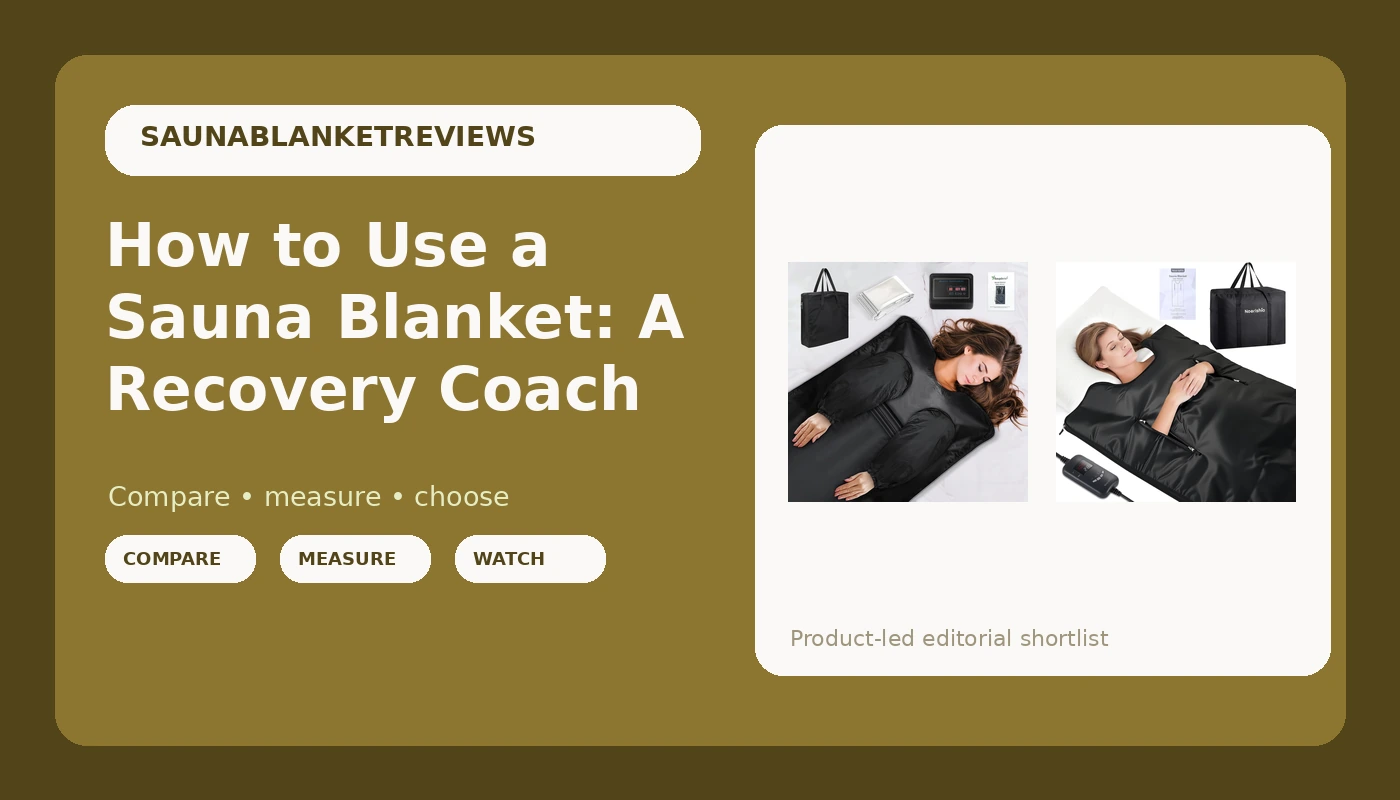
Most people who buy an infrared sauna blanket stop using it inside a month. Not because the blanket failed, but because nobody handed them a protocol: how hot, how long, how often, and what to do before and after. I have logged hundreds of sessions since 2022, and the people who stick with heat therapy are almost never the ones who bought the most expensive blanket. They are the ones who know what a session is supposed to feel like.
An infrared sauna blanket is heat therapy on your couch. It is not a sauna. If you are shopping for cedar walls, a ladle, and a cold plunge, this category will disappoint you, and I say that as someone who loves it. Buy it for what it actually is: 30 to 60 minutes of enveloping, controlled heat that raises your skin temperature, makes you sweat, and in my logbook nudges sleep onset earlier on the nights I use it.
Here is the workflow I run with recovery clients, plus the two blankets I would start with and the safety rules I will not bend on.
Why you should trust me
I am Tessa, a recovery coach in Boulder, Colorado. I swam competitively through college, and after a 2022 shoulder surgery my rehab stalled until I added regular heat sessions to the plan. I work mostly with CrossFit athletes and weekend warriors, and I have tested nine sauna blankets over three years.
I weigh myself before and after every session to measure sweat loss in grams, and I keep a logbook of heart rate, estimated core temp, session length, and sleep quality. That logbook is the only reason I trust anything I say about this category. I have killed two blankets at the zipper, never at the heating element. I also have a small scar from a cheap blanket that ran hot at one end, which is why a timer with auto-shutoff is a hard requirement for anything I recommend.
I am six months into a self-experiment on whether 20-minute sessions four times a week measurably improve sleep onset. Early read: a modest yes, and it depends heavily on when you do the session.
How I judge a sauna blanket
Four things decide whether a blanket is worth owning, and none of them are the number printed on the box.
Heat distribution comes first. A blanket that hits 160°F across your chest and 120°F at your feet is a broken product, not a warm one. Even, boring, consistent heat beats a scary max temp every time.
The zipper comes second. Zippers catch fabric, they jam, and they are what kills blankets. If the zipper feels cheap in your hand, the blanket is cheap.
The timer comes third. A temperature dial without auto-shutoff is a burn risk, full stop. People fall asleep in these things. If a blanket cannot turn itself off, I do not care how well it heats.
The controller comes fourth. How loud does it beep? Can you dim the display? A controller that screams at 3 a.m. when the timer ends is a blanket that will wake your partner and end up in a closet.
Smell and cleaning are the tiebreakers. A blanket that smells like a tire fire for three weeks is a return. Cleaning should take five minutes with a spray bottle and a towel, not a PhD in textile care.
The two blankets I would start with
Two very different buyers exist in this category: the person who wants a real session protocol, and the person who wants to relax on the couch and sweat a little. These two blankets map to those buyers.
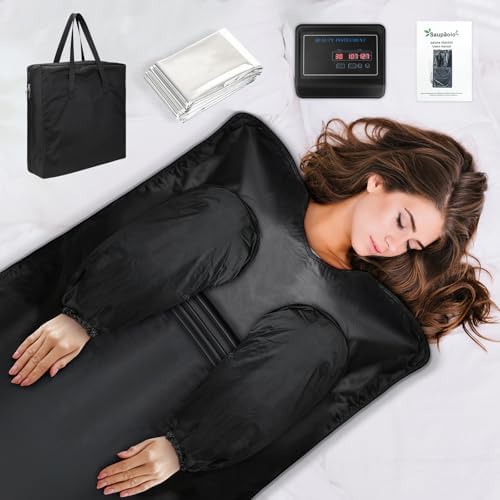
Our pick: Infrared Sauna Blanket, Far Infrared Blanket, Dual Temperature Control, Portable Infrared Sauna for Home, Max 176℉, 30-90 Min Timer, 6 ft x 3 ft
 Visit on Amazon →
This is the one I would hand a client who wants to run actual sessions. The 30 to 90 minute timer is the feature I care about most, because auto-shutoff is the line between a recovery tool and a burn risk. Dual temperature control matters more than people expect, since it lets you run the body zone hotter than the leg zone, which is how you avoid the cold-feet problem that ruins cheap blankets.
The 6 ft x 3 ft footprint fits a full-size adult with your head out, which is the only way I want anyone using a blanket. Max 176℉ is a ceiling, not a target. Nobody needs to run it there, and beginners should not. Think of the top of the range as headroom for the day you want a short, hot session, not as a setting to live at.
Flaws but not dealbreakers: A blanket with this many controls is more machine than the couch-nap crowd wants. If you will not read the manual and set a timer, buy the simpler option below.
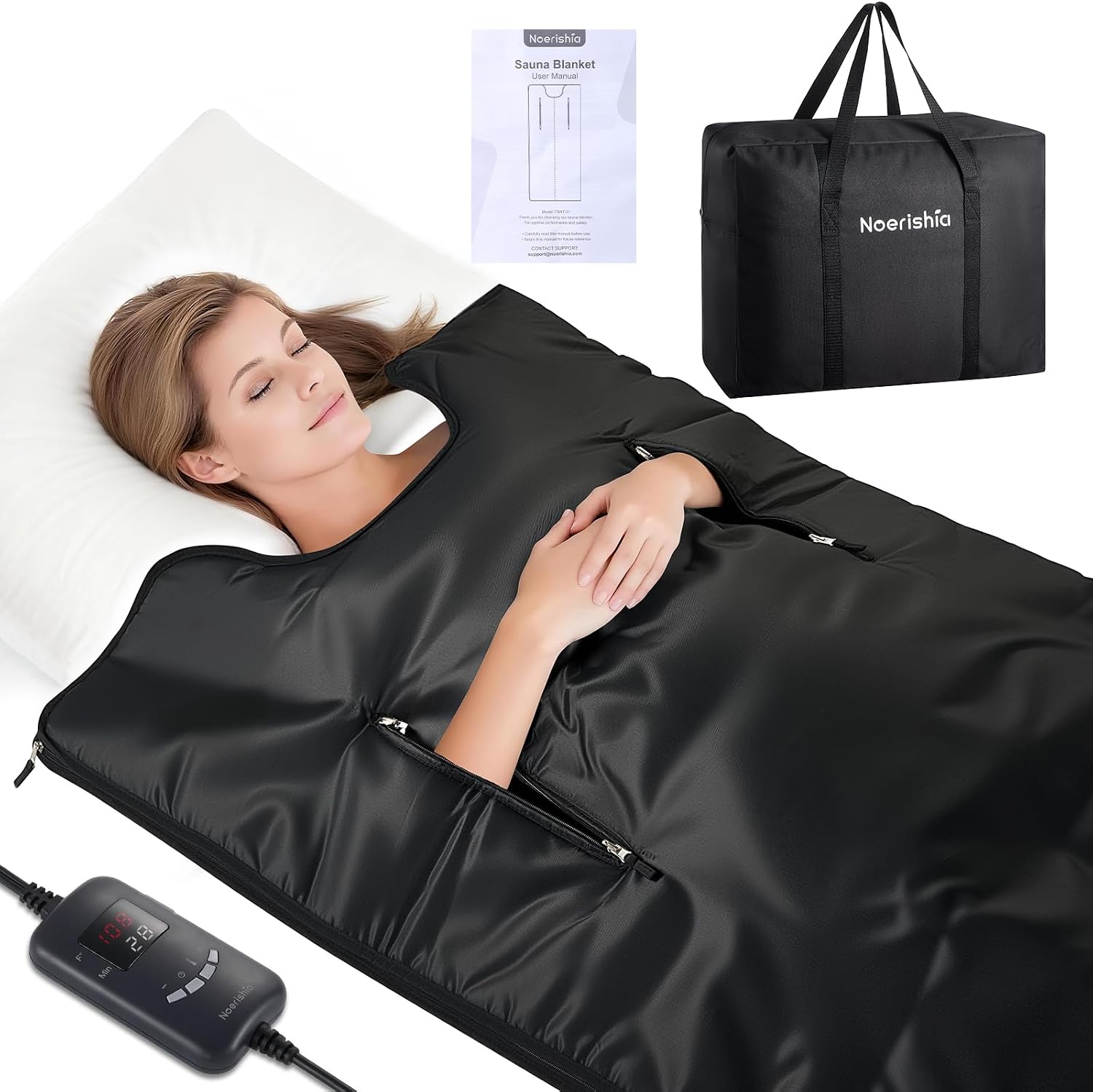
Budget pick: Sauna Blanket for Relaxation and Detox, Versatile Full Body Heating Wrap
 Visit on Amazon →
The word detox in the product name is marketing, and I want to be blunt about that before anything else. Your liver and kidneys handle that job, and no blanket changes the math. What this blanket actually is: a versatile full body heating wrap that gets you warm, makes you sweat, and feels good at the end of a long day. That is a real benefit. It just is not a cleanse.
As a relaxation tool it does the job, and it is the friendlier first blanket if your goal is a warm 30 minutes with a book rather than a logged training block. Set a timer on your phone regardless, and treat the first several sessions as a test of how your body responds, not a competition.
Flaws but not dealbreakers: Simpler controls usually mean less precise heat control. If you want to hold an exact temperature for a fixed 40 minutes, the pick above is the better tool.
The session workflow
This is the part that actually determines whether you keep using the thing.
Step one: Set the room. A cool room, roughly 68 to 72°F, with a fan you can point at your head. You want to be able to cool your face without leaving the blanket. Lay a large towel inside the blanket before you get in, and another one on the floor.
Step two: Weigh yourself. Same scale, same time of day, before you get in. Write it down. Sweat volume is the only honest metric in this entire category, and it is the one number that tells you whether a session was real or a warm nap.
Step three: Hydrate before, not during. Drink 16 to 20 ounces of water in the hour before your session. Drinking inside the blanket leads to a full bladder and a session you cut short.
Step four: Start conservative. 120 to 130°F for 20 minutes is the right first session. Not the top of the range for an hour. The people who hate sauna blankets are usually the people who went too hot on day one, felt awful, and never went back.
Step five: Get in correctly. Head and arms out, blanket up to your shoulders, towel between you and the heating surface. If your head is inside the blanket, you are breathing hot air for no reason and you will bail early.
Step six: Set two timers. The blanket's auto-shutoff and your phone. Redundancy is not paranoia when the failure mode is a burn.
Step seven: Come out slowly. Sit up, let your heart rate settle, then stand. Getting up fast after 30 minutes of heat is how people get dizzy and decide heat therapy is dangerous.
Step eight: Cool down for 10 minutes. Room temperature air, water, and no cold shower right away. Cold after heat is a great protocol for trained athletes and a miserable experience for everyone else. Build to it if you want it.
Step nine: Weigh yourself and log it. Sweat loss in grams, session length, temperature setting, and how you slept that night. Four weeks of that log will tell you more than any review, including this one.
Build to 30 to 40 minutes and 140 to 150°F over four to six weeks. Four sessions a week is a real protocol. Seven is not better, it is just dehydration with extra steps.
Safety rules I will not bend on
Auto-shutoff or no purchase. I mean it.
Never sleep inside a blanket. Not a nap, not a doze, not with a timer running. If you are the kind of person who falls asleep on the couch at 9 p.m., run your sessions in the morning.
Alcohol and sauna blankets do not mix. Heat plus alcohol is a blood pressure and fainting problem, and no session is worth that.
If you are pregnant, or you have a heart condition, a pacemaker, or uncontrolled blood pressure, talk to your doctor before you use one of these. I am a recovery coach, not a physician, and I will not pretend otherwise. Same for anyone on medication that affects sweating or temperature regulation.
Stop if you feel dizzy, nauseated, or chilled. Chills during a heat session mean you have been in too long.
The claims I will not repeat
Detox is marketing. Weight loss claims are marketing dressed up as science. Session weight loss is water, and it comes back the moment you drink. The honest benefits are relaxation, a temporary rise in skin temperature, and a recovery window that many athletes find useful, plus the sleep-onset effect I am still measuring on myself.
I also will not pretend a blanket replaces a sauna. You lose the ritual, the community, and the dry air. What you gain is 30 minutes of heat in your living room at 9 p.m. in December, which for most people is the difference between doing it and not.
One prediction from watching this category: the cheap end will thin out as returns from zipper failures eat the margins, and safety certifications will become the thing brands compete on. Buy for the zipper and the timer, not the max temperature.
What this all costs
Check current Amazon price on both blankets, then divide by the number of sessions you will realistically run in a year. At four sessions a week, that is about 200 sessions. Running cost per session after the purchase is electricity and a load of laundry, which is pennies.
Compare that to a gym sauna membership or a drop-in fee at a spa, and the math is not close. The purchase price is the easy part. The 20 minutes you spend setting a timer and weighing yourself is what separates a blanket that changes your evenings from an expensive towel warmer in a closet.
Start at 120°F, 20 minutes, twice this week. Log the number. That is the whole job.