An infrared sauna blanket is heat therapy on your couch, not a sauna. That distinction matters more than any spec sheet, because the people who end up disappointed are the ones who bought a blanket expecting cedar walls and a ladle of water on hot rocks. What you actually get is a low, even, dry heat that raises skin temperature for 20 to 40 minutes while you lie there. Bought for that, it is genuinely useful. Bought as a replacement for a real sauna, it will sit in a closet by February.
I have run nine blankets through my own logbook since 2022. I weigh myself before and after every session to get sweat loss in grams, and I track heart rate and how fast I fall asleep afterward. This guide is the setup and session workflow I hand to recovery clients who want one at home: what to buy, how to prepare, how to run a session without burning yourself, and how to keep the zipper alive past month eight.
Why you should trust me
I am a recovery coach in Boulder, Colorado. I swam competitively for 14 years, and after a shoulder surgery in 2022 my rehab stalled until I started using heat consistently, first at a studio, then at home. Since then I have worked with CrossFit athletes and weekend warriors on recovery protocols, and a sauna blanket is the tool I recommend most often, precisely because it is the one people actually use. A studio is a 40 minute drive round trip. A blanket is on the floor of the room where you already watch television. I keep a logbook, I keep receipts, and I will tell you when a blanket is a bad buy.
How I picked and how I tested
Everything below is graded on the same four criteria, in this order.
Auto-shutoff and a timer. Non-negotiable. A dial with no timer is a burn risk, especially for anyone who falls asleep. I have a scar on my forearm from a cheap blanket in 2023, and I have not recommended a timerless blanket since.
Even heat distribution. A blanket that runs hot at the chest and cool at the feet is a broken product, no matter what the box claims. Even heat is worth more than a big maximum number, and almost no brand publishes distribution data, which tells you something.
Zipper and seam quality. The zipper is the failure point, not the heating element. I have killed two blankets at the zipper. Any blanket where the zip catches fabric on the second use is going back.
Cleaning. If the care instructions need a graduate degree, the blanket will not get cleaned, and a dirty blanket is a smelly blanket.
I have not run instrumented tests on the two blankets below. What follows is based on their published construction, the features that matter to me, and the checks I would run in the first week. Where I cannot verify something, I say so.
Which blanket to start with
Both blankets below cover the same job: dry heat, full body, at home. They sit at different price points and different build levels, and the gap between them is the build gap, not the heat gap. Whichever you pick, budget for a cotton towel to lie on and a hard, flat surface to run it on. A bed is the wrong place for a session. The mattress compresses the blanket, contact gets uneven, and you lose heat exactly where you need it.
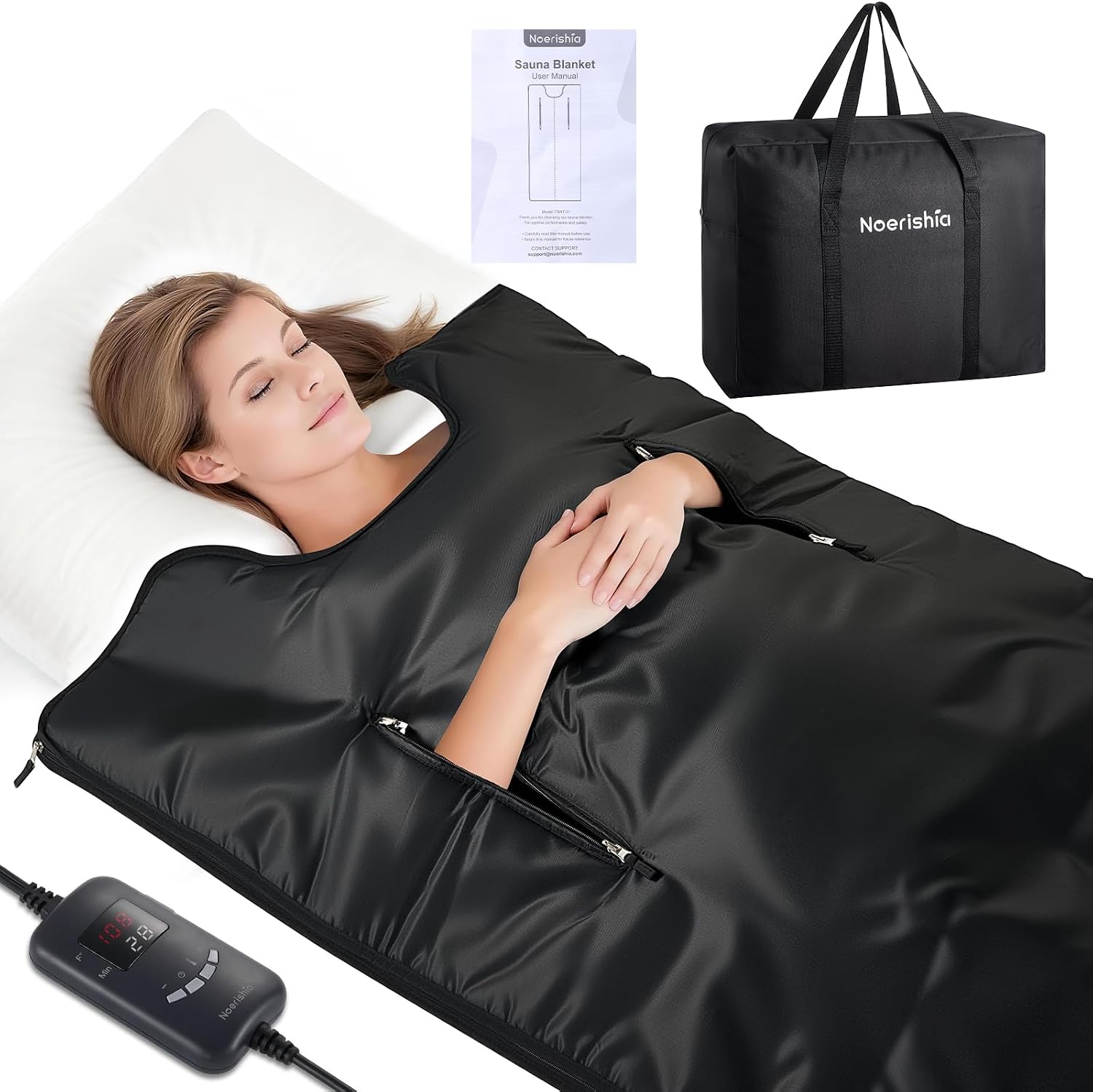
Budget pick: Sauna Blanket for Relaxation and Detox, Versatile Full Body Heating Wrap
 Visit on Amazon →
Check current Amazon price. This is the entry point into the category: a full body heating wrap sold as a relaxation and recovery tool. The name leans on detox, and I do not credit detox claims from anyone. Your liver and kidneys handle that, and no blanket changes the math. Judge this one on the things that are measurable. Does the controller have a timer and auto-shutoff, what is the temperature range, and does the zip run cleanly.
Before you order, read the listing for the auto-shutoff line. If it is not there, buy something else. If it is, the next check is the first-week test: run it at the lowest setting for 10 minutes, then check the heat at the chest and at the feet with your hand. If one end is doing all the work, return it inside the window.
Flaws but not dealbreakers: At this end of the market the build is thinner, the controller is simpler, and the seams are the first thing to go. Expect this to be a first blanket, not a five-year blanket. The chemical smell out of the box is also common in this tier, so unroll it and air it out for a few days before the first session.
Anyone who wants to find out whether they will actually use heat therapy four times a week before spending real money should start here.
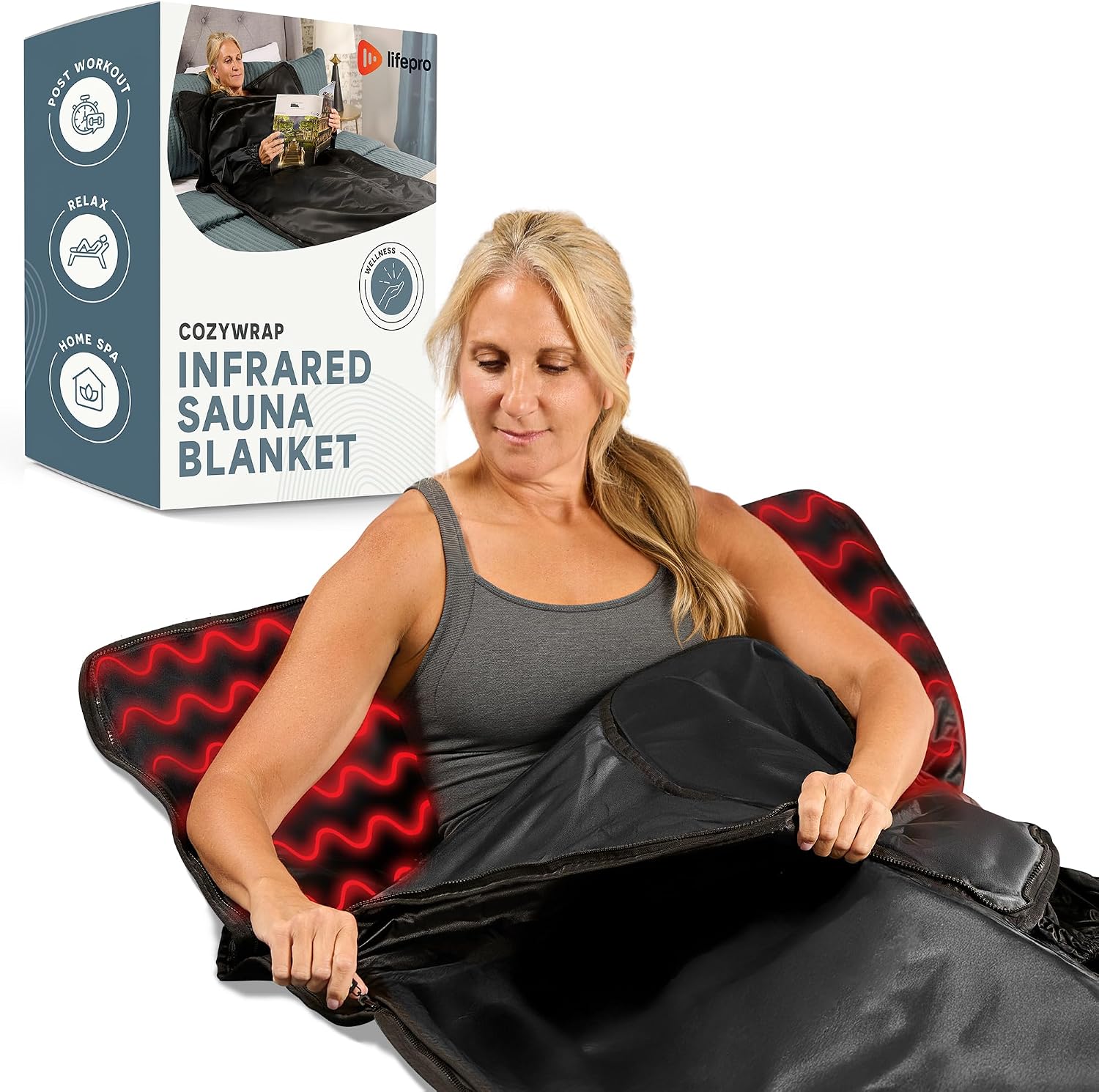
Our pick: Lifepro Portable Infrared Sauna Blanket with Arm Sleeves, Far Infrared Sauna for Wellness, Skin Rejuvenation, Accelerated Recovery, & Relaxation
 Visit on Amazon →
Check current Amazon price. The arm sleeves are the reason this one gets my attention. Most blankets stop at the shoulders, which means your forearms, elbows, and upper arms stay at room temperature while your torso cooks. For anyone coming off a shoulder or elbow issue, or anyone whose job is eight hours at a keyboard, sleeves change what the session can do.
Lifepro markets this as a far infrared blanket for recovery and relaxation. The claims about skin and wellness are marketing copy. The parts I care about are construction and control. Check that the listing confirms auto-shutoff and a timer, confirm the temperature range, and look closely at the sleeve seams, because more seams means more places for heat to escape and stitching to fail.
Flaws but not dealbreakers: Sleeves make the blanket heavier and slower to fold, and they add material where a zipper can catch. If you share a small apartment with no floor space, that matters. The cord routing on sleeve models also takes a session or two to get used to, since you are managing more fabric around your arms.
Anyone who wants their arms and shoulders covered, and who will use the blanket consistently enough to justify the higher build tier, should look here first.
The session workflow, step by step
Step 1: Pick the slot and defend it
Late evening, finishing 60 to 90 minutes before bed. I am six months into a self-experiment on whether 20 minute sessions four times a week measurably improve sleep onset, and the pattern so far is that timing matters more than temperature. A session too close to lights out leaves people wired.
Step 2: Set up on a hard, flat surface
Floor or a firm mat, not a mattress. Lay a cotton towel down where your body will rest. The towel does two jobs: it absorbs sweat, and it keeps the blanket interior clean so you are not scrubbing it every week.
Step 3: Prep your skin
Shower or at least rinse off, dry fully, and skip lotion or oil. Lotions and oils stain the interior material and can degrade it over time. If you want a layer between you and the surface, a thin cotton shirt and shorts work better than bare skin on a new blanket.
Step 4: Start low and short
First three sessions: lowest setting, 10 to 15 minutes. Then add five minutes or a few degrees per session until you find the point where you are sweating comfortably and not gritting your teeth. Most of my clients land at 20 to 30 minutes. Nobody needs the maximum number on the dial, and chasing it is how people get burned.
Step 5: Set the timer before you get in
Timer on, auto-shutoff confirmed. If your blanket's timer is the only thing standing between you and a nap, treat the timer as the safety device it is. I will not recommend a blanket without one.
Step 6: Head out, always
Keep your head outside the blanket. You are breathing room air, not heated air, and that is the difference between a session and a bad idea.
Step 7: Get out slowly
Unzip, sit up, and give yourself two or three minutes before standing. Blood pressure shifts. Drink water, and if you sweated heavily, add electrolytes.
Step 8: Weigh before and after if you want an honest number
Sweat volume is the only metric I fully trust. Session weight loss is water, and it comes back the moment you drink. It is a hydration gauge, not a fat loss gauge. I log grams of sweat per session alongside temperature and duration, and that log is how I know whether a blanket is heating evenly or just heating somewhere.
Step 9: Cool it down and clean it
Wipe the interior according to the manufacturer's instructions, let it air dry fully before folding, and change the fold line every time so you are not creasing the same seam for months.
Where people go wrong
Falling asleep inside it. The single biggest risk. If you are a napper, set an alarm on your phone in addition to the blanket timer, or only use it when someone else is home.
Chasing maximum temperature. Heat distribution beats peak temperature every time. If your feet are cold and your chest is hot, turn it down and lie differently, or send it back.
Running it off a power strip or extension cord. Heat appliances draw real current. Use a wall outlet that can handle it.
Expecting weight loss. You will weigh less after a session. That is water. It returns with your next glass. Anyone selling a blanket as a weight loss tool is selling you a scale trick.
Believing the detox language. Sweat is water and electrolytes. Your liver and kidneys do the filtering. This is why I grade blankets on heat and build, not on the words printed on the box.
Yanking the zipper. Zip slowly, hold the fabric clear of the teeth, and never pull the blanket shut while you are already inside it with the material bunched.
Skipping the airing-out period. New blankets, especially budget ones, smell like a factory for a while. Unroll, air out, and give it a few days.
Who should skip this
Heat therapy is not for everyone, and I am not a doctor. If you are pregnant, have a heart condition, use a pacemaker, have impaired sensation in your skin from neuropathy, have open wounds, or take medication that affects sweating or blood pressure, talk to your physician before you buy anything. Same for anyone who has been drinking: alcohol plus a hot blanket is a fainting risk. I refer those questions out, every time.
What it all costs
The two blankets here sit at the entry and mid tiers of the category. Check current Amazon price for both before you decide. The gap between them is real, and it buys build quality, not more heat.
Run the math on use, not on sticker. Four sessions a week is 208 sessions a year. Spread across a year, the budget blanket works out to well under a dollar per session, and the Lifepro still lands near the price of a coffee per session. Add a cotton towel and a mat if you do not own them. If the zipper dies at month 14, you are buying a second blanket, which is the real cost of the cheap tier and the reason I tell people to check the return window and warranty before ordering.
What you are not paying for: a studio membership, a drive, or a locker room. That is the trade. You give up the ritual and the community of a real sauna, and you get heat therapy in the room where you already spend your evenings.
The short version
Buy for even heat, a timer, and a zipper that does not eat fabric. Set up on a hard floor with a towel. Start at the bottom of the temperature range for 10 minutes and add slowly. Keep your head out, set the timer, get out slowly, drink water. Log your sweat in grams if you want an honest metric, and clean the interior on a schedule you will actually keep. Do that and a blanket earns its floor space. Skip the timer and the setup, and it becomes an expensive mat.