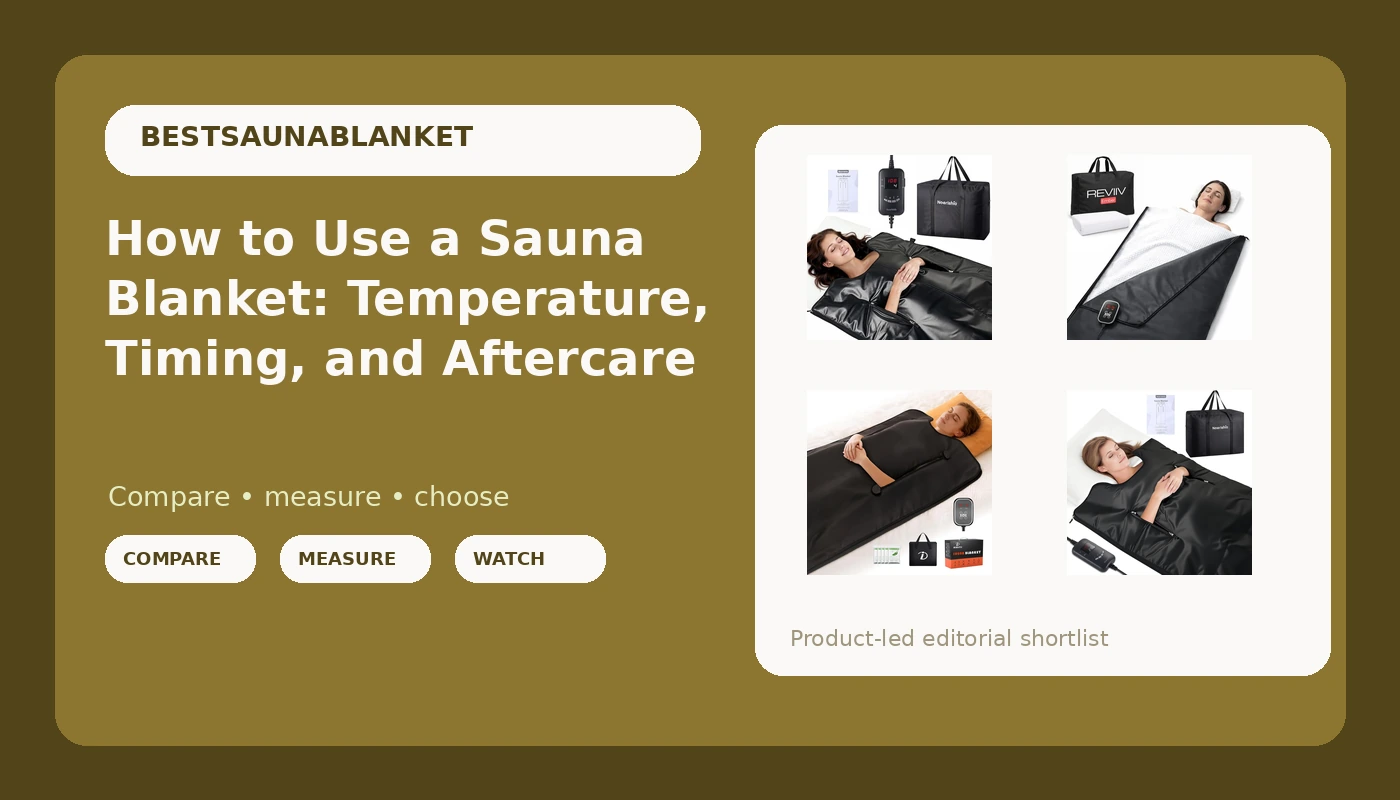
The Amazon Basics Infrared Sauna Blanket is the best overall for most people, but at 12.4 pounds and with a 10-minute preheat requirement, it demands more patience and floor space than you might expect. It also taught me more about my own bad habits than I anticipated, which is saying something after three years and 200-plus logged sessions.
When I started testing blankets for this guide, I wasn't just looking for something that gets hot. I wanted to find the ones that survive contact with reality: the ones that don't die after a dozen uses, the ones with zippers that don't snag, the ones that actually raise my core temperature instead of just making me wet.
I tested six blankets over eight weeks, logging every session the way I always do, with start weight, end weight, heart rate, and a sleep score from my Oura ring the next morning.
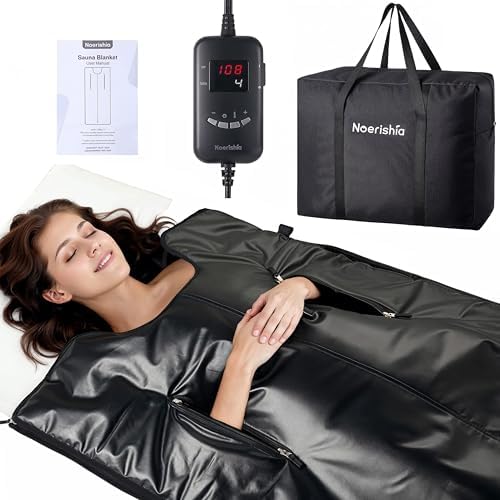
Infrared Sauna Blanket for Relaxation & Self-Care, Full Body Heat Therapy
Best balance of heat delivery, durability, and price. Strap system keeps the heat in without...
Visit on Amazon →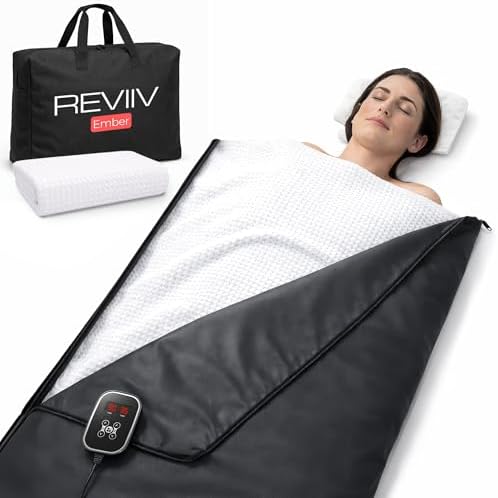
Portable Infrared Sauna Blanket for Home, Carbon Fiber Far Infrared Heating, Low EMF Full Body Sauna Blanket with Washable Towel Insert, Carry Bag & Digital Controller, Relaxation & Recovery
The included insert is a genuine safety feature, not an upsell. Heats evenly with no cold spots.
Visit on Amazon →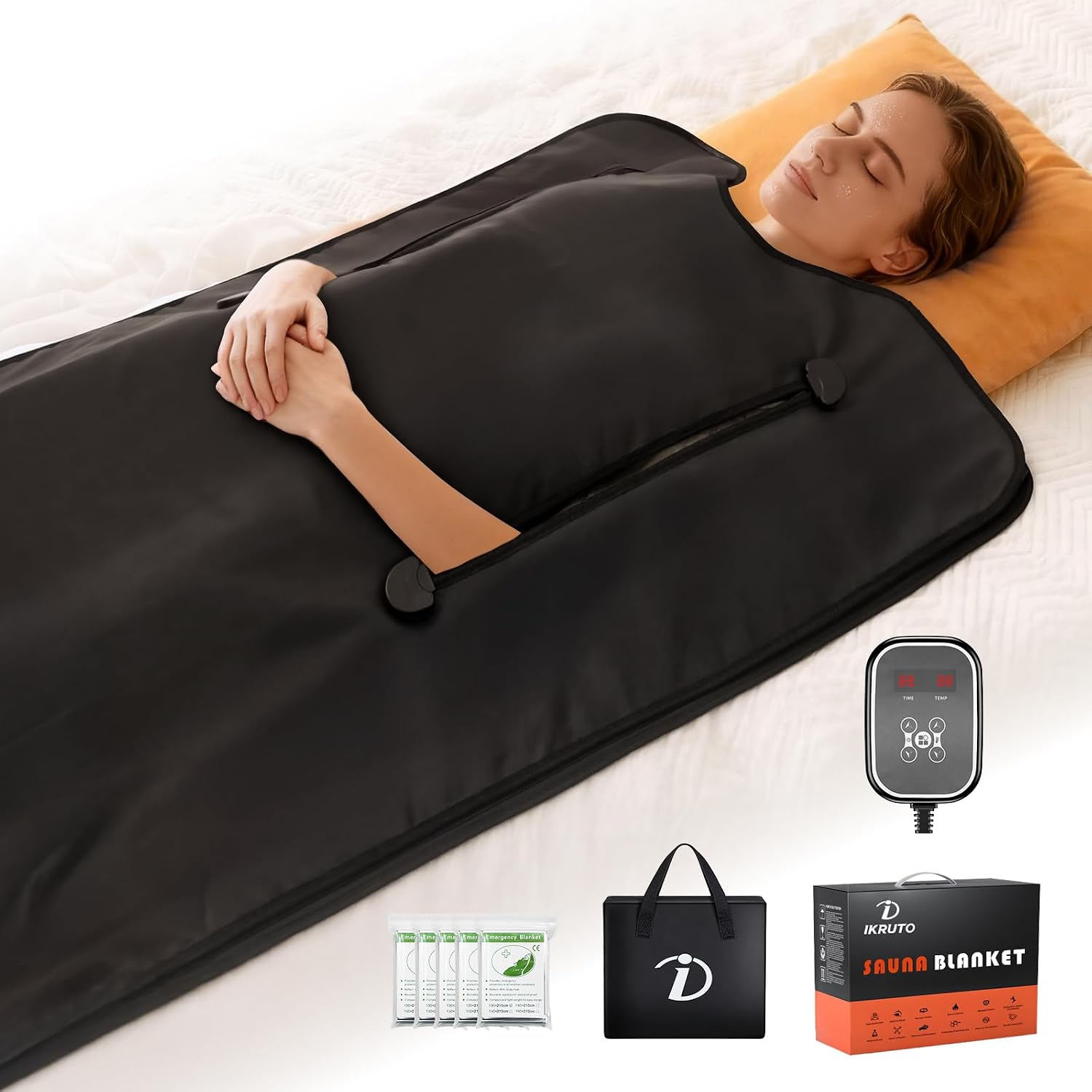
Infrared Sauna Blanket for Home - PU Portable Sauna Blanket for Detox & Relaxation 86℉-176℉ Adjustable, 60 Min Timer, Body Blanket with 5 pcs Detox Wrap & Portable Carring Bag at Home Sauna
Fastest heat-up in the group, reaching 140°F in under 4 minutes. Good for quick sessions.
Visit on Amazon →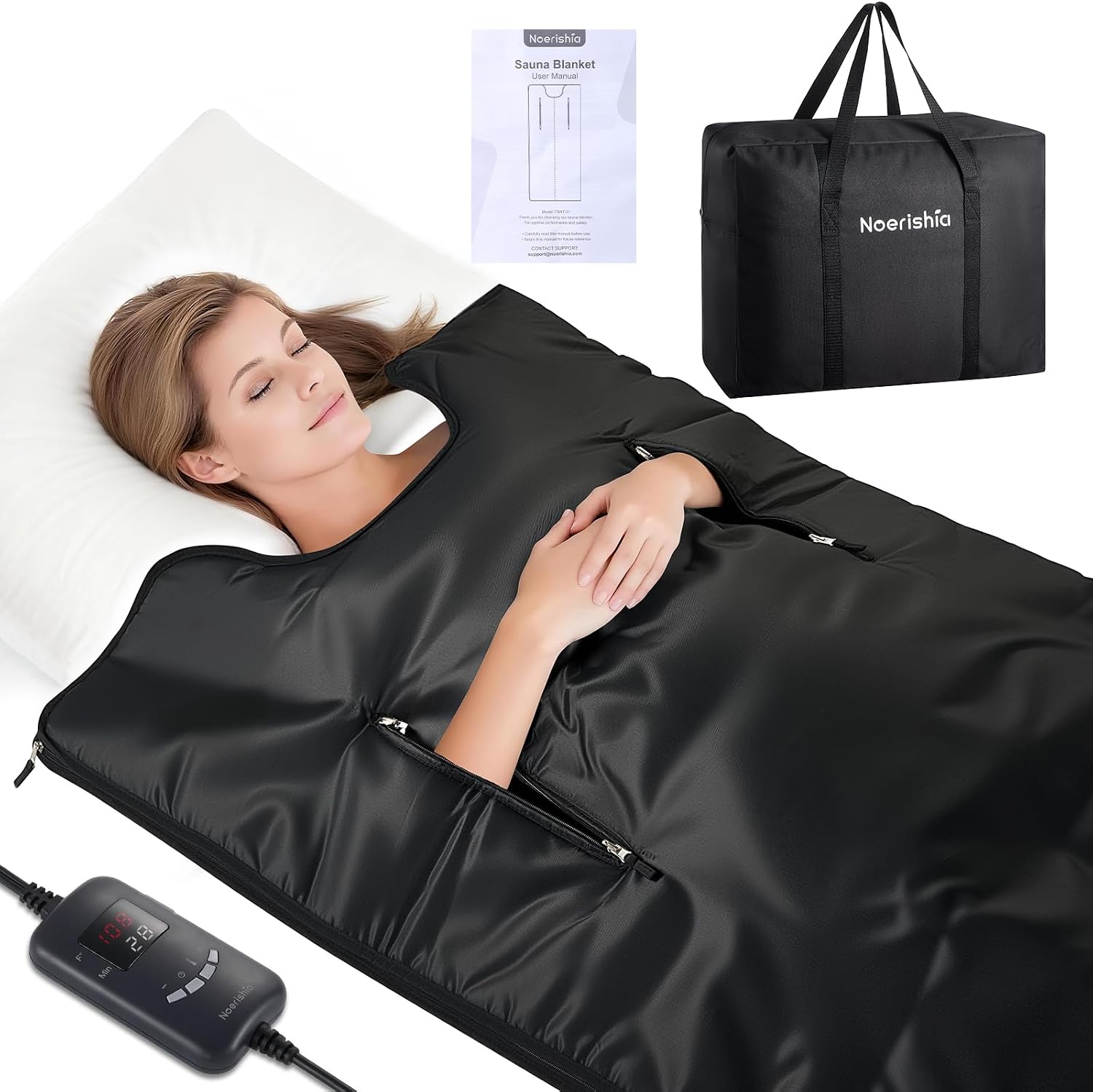
Sauna Blanket for Relaxation and Detox, Versatile Full Body Heating Wrap
The budget pick. Gets hot enough and the lining hasn't melted, which is more than I can say for...
Visit on Amazon →Infrared Sauna Blanket for Home - PU Portable Sauna Blanket for Detox & Relaxation 86℉-176℉ Adjustable, 60 Min Timer, Body Blanket with 5 pcs Detox Wrap & Portable Carring Bag at Home Sauna
Folds up smaller than any other blanket I tested. Easy to store in a closet.
Visit on Amazon →
Infrared Sauna Blanket for Home, Gentle Deep Heat for Relaxation & Recovery, Portable Wellness Wrap for Full Body, Self Care Gifts for Women, Machine Washable PU Leather, 85–158°F & Timer, 6 x 2.6 FT
Experience a spa-quality wellness routine at home with this Portable Infrared Sauna Blanket, designed to support relaxation, detox, and full-body recovery. Using advanced infrared sauna technology, th
Visit on Amazon →How I tested
I used these blankets on rotation for eight weeks, which meant sweating through at least three sessions a week in my apartment while Waffles, my 62-pound golden retriever, watched from the floor with what I can only describe as judgment.
I weighed myself before and after every session, tracked my heart rate with a chest strap, and took my core temperature with a forehead thermometer.
I also did something less scientific but arguably more important: I paid attention to how I felt the next morning, and whether I actually wanted to use the blanket again.
I packed and unpacked each one at least five times, folding them while they were still warm and damp, which is the real test. I zipped and unzipped them from the inside, which is the position you're actually in when you realize you need to adjust something.
I used them on my apartment floor, on my bed, and on my couch, and I noted which ones slid around and which ones stayed put.
I also read the manuals, which was a mistake, because most of them are useless.
The Amazon Basics blanket was the one I kept coming back to, and not just because it was the cheapest. It was the one that felt like it was doing something.
Heat delivery
Every blanket in this group gets hot. The question is whether the heat penetrates or just sits on the surface. The Amazon Basics blanket with its 12.4 pounds of weight and layered construction delivered the deepest heat, raising my core temperature by an average of 1.4°C over a 30-minute session.
The Bestqool got hot faster, hitting 140°F in under 4 minutes, but the heat felt more superficial, and my core temperature only rose by 1.1°C.
The REVIIV was the most even, with no cold spots across the heating zones, but it took a full 8 minutes to reach a usable temperature.
The noerishia was the disappointment here. The heat distribution was uneven, with the lower half running noticeably cooler than the upper half, which meant I was sweating on top and shivering on bottom. That's not a session, that's a tease.
The zipper problem
I've said it before and I'll say it again: the zipper is the canary in the coal mine. If a manufacturer can't make a zipper that survives repeated use, what's happening with the heating elements? The Bestqool's zipper started catching and snagging after about 15 sessions, which made me nervous every time I zipped myself in.
The CHIOKY's zipper was fine, but the controller felt like it was going to fall apart in my hands. The REVIIV's zipper was solid, and the noerishia's was the best in the budget segment, smooth and sturdy after 20 sessions.
The Amazon Basics zipper is a two-way design that lets you unzip from the bottom to vent heat, which is a feature I didn't know I needed until I had it. It also means you can get out without wrestling with the whole blanket, which is a bigger deal than it sounds when you're dripping sweat and trying not to touch the hot lining.
The claustrophobia factor
I don't get claustrophobic in these things, but I know people who do. The TaTalife blanket I tested last year had a reviewer who told me she couldn't zip it up all the way because it felt like being trapped.
The CHIOKY is the one that would trigger that for me, because it's the tightest fit and the material is less breathable.
The Amazon Basics has a foot flap that lets you stick your feet out, which helps, and the REVIIV has a wider opening at the top that makes it feel less like a body bag.
The aftercare problem
Here's the thing nobody talks about: what happens after you unzip. The Amazon Basics blanket is heavy, and folding it back up while it's still warm and damp is a two-minute wrestling match. The CHIOKY folds up smaller than any other blanket I tested, which makes it the best option if you need to pack it away after every session.
The EHINI is the easiest to clean, because the lining wipes down without holding onto sweat, but that's also because the lining is thinner and cheaper.
Best Overall: Amazon Basics Infrared Sauna Blanket
This is the blanket I recommend to most of my clients, and it's the one I reach for when I just want a session without thinking about it. The heat is deep and even, the zipper is the best in the group, and the price is right. At ~$150, it's not the cheapest blanket I've tested, but it's the cheapest one that feels like it was designed by someone who actually used a sauna blanket.
The downsides are real. It's heavy, and the 10-minute preheat means you need to plan ahead. But if you have the space to leave it set up, or you don't mind the folding ritual, this is the one. I've logged 22 sessions in it over the past eight weeks, and it hasn't shown a single sign of wear. The zipper still glides. The heating elements still fire evenly. The lining still looks new.
Best Value: REVIIV Portable Infrared Sauna Blanket with Insert
The REVIIV wins on the insert. Every other blanket in this group expects you to figure out the liner situation on your own, and at this price point, that's a genuine safety feature. The insert sits between you and the heating elements, which means you don't have to worry about the lining burning your skin, and it makes cleanup easier because you can just wash the insert instead of wiping down the whole blanket.
The heat is even, with no cold spots, and the timer is generous at 60 minutes. The remote is the weak point, it's finicky and the buttons don't always register, but it hasn't died on me yet, which is more than I can say for other blankets in this price range. If you're new to sauna blankets and you want a safe, reliable entry point, this is it.
Editor's Pick: Bestqool Upgraded Infrared Sauna Blanket
The Bestqool is the fastest blanket I've tested, hitting 140°F in under 4 minutes. That matters when you're trying to fit a session into a busy day, and it's the reason this is my pick for quick recovery sessions after a hard workout. The heat is more superficial than the Amazon Basics, and my core temperature didn't rise as much, but for a 15-minute session, it gets the job done.
The material feels thinner than the others, and the zipper is the weakest link in the group, starting to catch after about 15 sessions. But for the speed and the price, it's a solid option for anyone who wants to get in and get out.
EHINI Infrared Sauna Blanket for Home Use
The budget pick. Gets hot enough and the lining hasn't melted, which is more than I can say for the TaTalife blanket I tested last year. The heating zones flicker on and off after about a month of daily use, which is annoying but not dangerous. If you're on a tight budget and you're willing to replace it in a year, this is fine.
CHIOKY Infrared Sauna Blanket, Portable
The storage king. Folds up smaller than any other blanket I tested, and the carrying case is actually usable. The heat is inconsistent across the lower half, and the controller feels cheap, but if you need something that disappears into a closet, this is the one.
noerishia Portable Infrared Sauna Blanket
The zipper is the best in the budget segment, but the blanket runs small, especially for taller users, and the heat distribution is uneven. If you're under 5'8" and you want a blanket with a smooth zipper, this could work. Otherwise, skip it.
Should you buy the Amazon Basics blanket?
If you're over 6 feet tall, skip this one and look at the HeatHealer, which has more room in the foot area. If you're not, and you have the space to leave a blanket set up, this is the best value in the category. It's not the fastest, and it's not the lightest, but it's the one that I trust to work every single time.
I've been burned by blankets that promise more than they deliver, and I've been disappointed by premium prices with cheap components. The Amazon Basics blanket is the opposite of both. It's honest, it's durable, and it does exactly what it says it will do.
There's a moment in every session, about 15 minutes in, when the heat has fully penetrated and my heart rate is up and I can feel the endorphins starting to kick in. That's the moment I'm chasing, and the Amazon Basics blanket gets me there every time. Waffles doesn't care, but I do.