Most people buy a sauna blanket expecting a sauna. Then they crawl in, crank the dial, stay for 45 minutes, sleep badly, and leave a one-star review. The product was fine. The sauna blanket session was wrong.
I'm Tessa, a recovery coach in Boulder, Colorado. I've been running sessions four nights a week since 2022, and I write heat protocols for CrossFit athletes and weekend warriors who want the recovery window without a 40-minute drive to a gym. I weigh myself before and after every session, log the sweat loss in grams, and note my heart rate and how long it took me to fall asleep. That logbook is the reason I have opinions.
This is the how-to I hand to clients. Setup, timing, when to get out, and how to keep the zipper alive longer than the heating element.
Why you should trust me
I've tested nine blankets over three years. I killed two of them, and both died at the zipper, not the heater. I have a scar on my forearm from a cheap blanket with no auto-shutoff, which is why that feature is a hard requirement in everything I recommend.
I'm six months into a self-experiment on whether 20-minute sessions four times a week measurably change how fast I fall asleep. I don't know the answer yet. I do know that a blanket that runs 160°F across the chest and 120°F at the feet is a broken product no matter what the box says, and I know that the category split into two groups: cheap blankets that get hot and die inside a year, and real ones with weighted construction and even heat distribution. The price gap is the build gap.
I'm not a doctor. If you're pregnant, or you have a heart condition, a pacemaker, or a condition that messes with your ability to sweat, this article is not your clearance. Your doctor is. I refer every client with those flags out, every time.
What a sauna blanket actually does, and what it doesn't
A sauna blanket is a far infrared heating pad you lie inside. That's it. It warms your skin, your skin warms your blood, and over 20 to 30 minutes your core temp climbs slowly. You sweat. You get the heat shock protein response and the parasympathetic drop that comes with passive heating. That's the real product: relaxation, a recovery window after training, and for a lot of people, an easier time falling asleep an hour later.
What it does not do is detox you. Sweat is water and electrolytes. Your liver and kidneys handle the rest. It also does not burn fat. Session weight loss is water, and I say that as the person who weighs herself before and after every session and writes the number down. The scale moves two pounds and moves back after you drink. Anyone selling you a sweat challenge is selling you dehydration.
Two things matter more than maximum temperature. The first is heat distribution. Even warmth from shoulders to calves beats a hot spot at the chest. The second is auto-shutoff. A dial with no timer is a burn risk, especially for anyone who gets drowsy in heat. No timer, no purchase.
What you need before your first session
The list is short. A blanket with a timer and auto-shutoff. Two large towels, one under you and one to wrap in after. A full water bottle. A scale, if you want honest data. A hard floor or a bed you don't mind sweating on. And a way to keep other humans out of the room for half an hour, which is a bigger deal than most people plan for.
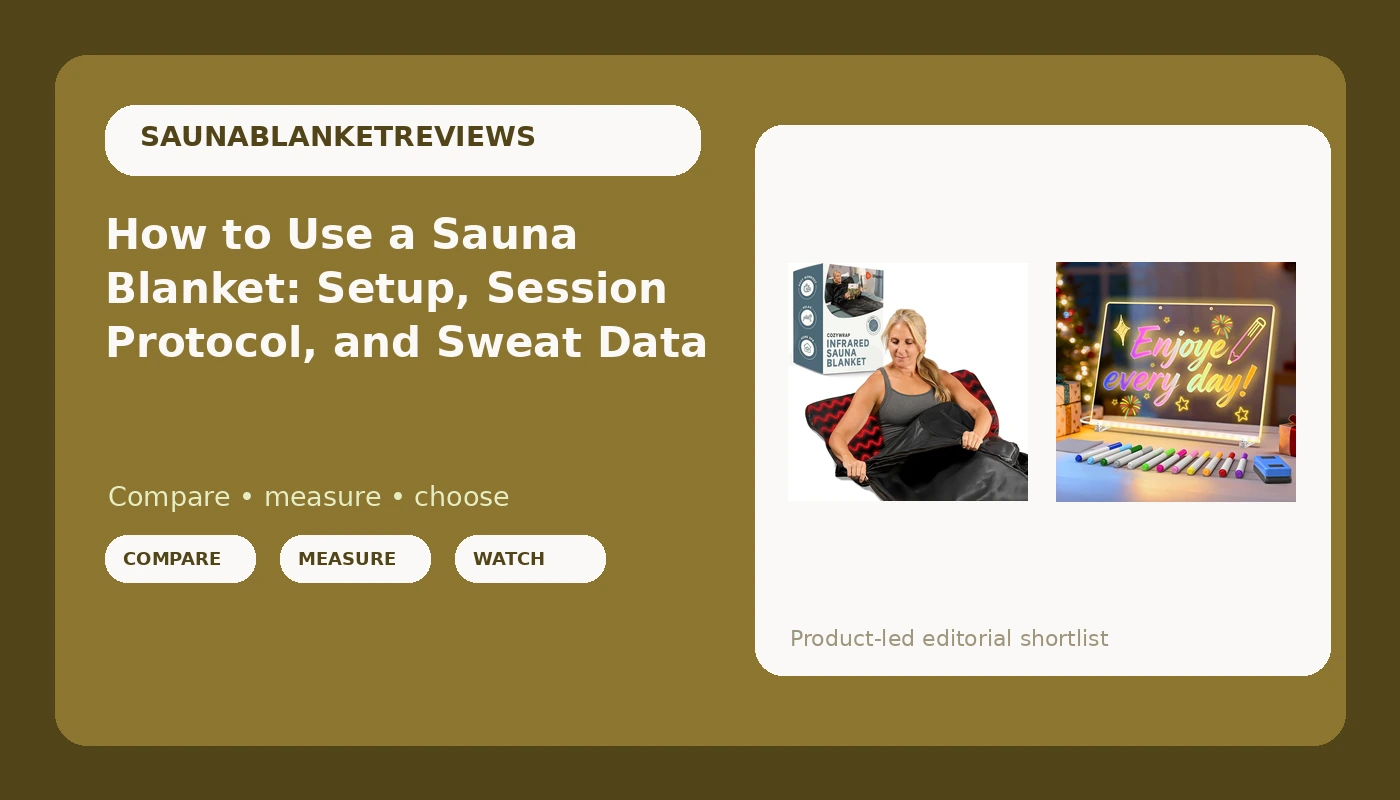
The blanket I start clients on: Lifepro Portable Infrared Sauna Blanket with Arm Sleeves, Far Infrared Sauna for Wellness, Skin Rejuvenation, Accelerated Recovery, & Relaxation
 Visit on Amazon →
The arm sleeves are the feature I care about most here, and it's not a gimmick. Most blankets pin your arms to your sides, which is miserable if you're coming off a shoulder issue or you just want to read. Getting the arms inside the heat envelope also means the session feels uniform instead of "hot torso, cold hands," which is the complaint I hear most from people who quit on blankets early.
This is a portable far infrared unit, so it folds and stores in a closet, which matters in a Boulder rental where nobody has a spare room. Run it on a towel, keep the session at 20 to 30 minutes, and use the timer every single time, including the sessions where you feel great and want to push it. Feeling great at minute 25 is exactly when people get into trouble.
A note on the marketing copy: "skin rejuvenation" and "wellness" are words on a box, not clinical claims. The reason to buy this is convenient, even, timer-controlled heat you can use on a Tuesday night. That's the whole value proposition, and it's enough.
Flaws but not dealbreakers: You will need to read the cleaning instructions carefully, because every blanket in this category has a different rule about wiping versus washing, and the wrong one kills the wiring. Also budget for a dedicated towel. The interior picks up sweat and salt, and you want a barrier you can launder.
Anyone who wants heat therapy at home without dedicating a room to it should start here.
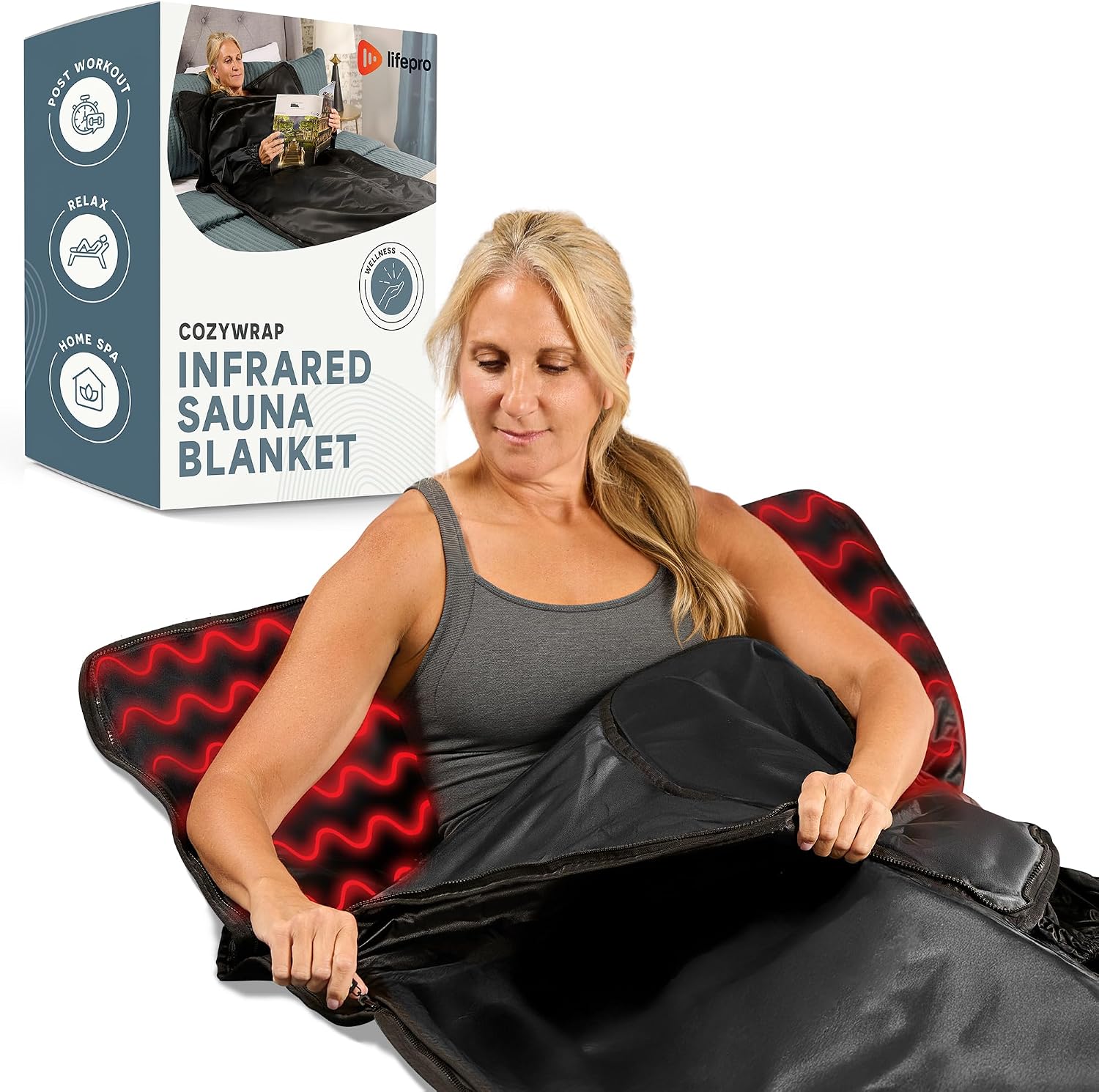
If you have kids in the house: LED Drawing Board for Kids - 13.7x10.6 Inch, rasable Acrylic Doodle Pad, Display Booths,with 12 Fluorescent Markers,Stand,4 Modes & 7 RGB Colors - Creative Fun & Christmas Gift for Grandkids
 Visit on Amazon →
This is not recovery gear and I'm not going to pretend it is. It's in this guide for one practical reason: an interrupted session is a wasted session. If you have grandkids or small kids in the house, a 20 to 30 minute heat session is exactly the length of one attention span, and a lit drawing pad with a stand, 12 fluorescent markers, 4 modes, and 7 RGB colors buys you that window. The 13.7 by 10.6 inch acrylic surface wipes clean, so it survives being used on the floor next to you while you're sweating in a blanket.
Buy it as a Christmas gift for grandkids, buy it as a quiet-time tool, or skip it entirely if your house is already quiet. Either way, decide before your session starts, not eleven minutes in when someone is knocking on the door.
Flaws but not dealbreakers: It's a kids' art toy, so treat the markers like markers. They end up on hands, tables, and occasionally a wall, and the pad only glows when it's powered.
The session protocol, step by step
This works with any blanket that has a timer and auto-shutoff. It is the same protocol I write for athletes and for clients who just want to relax after work.
Step one: Hydrate first, and not with alcohol. Drink 12 to 16 ounces of water in the hour before. Skip alcohol entirely. Alcohol plus passive heating plus a closed blanket is how people end up dizzy and nauseated.
Step two: Set up the floor. Lay a large towel inside the blanket, another under it if you're on carpet, and keep water within arm's reach. Phone outside the blanket, on the floor, timer set.
Step three: Preheat for five minutes. Let the blanket come up to temperature with the lid open. Getting in cold is the fastest way to decide you hate this.
Step four: Start lower than you think. For your first three sessions, run it well below the maximum setting. You can always add heat next time. You cannot un-cook yourself.
Step five: Twenty minutes, then reassess. Stay in for 20 minutes the first week. If you feel fine, add five minutes per week up to 30. That's the ceiling I use with clients. Longer sessions are not better sessions.
Step six: Get out at the beep. Not when the chapter ends, not when the song finishes. At the beep. Sit up slowly, because blood pressure drops when you stand after heat.
Step seven: Cool down before you shower. Wrap in the dry towel and sit for 10 minutes. Cold water immediately after heat is a shock to the system, and a lukewarm rinse is kinder on your skin than a hot shower that keeps the sweating going.
Step eight: Log it. Time in, setting, how you felt at minute 10 versus minute 20, and what time you fell asleep. Three weeks of that log tells you more about whether this product works for you than any review, including mine.
Safety rules I will not bend on
Never sleep inside a blanket. Not for a nap, not for the last ten minutes of a movie. Set the timer and stay awake.
If the blanket has no auto-shutoff, return it. I have a scar that says this isn't hypothetical.
Get out immediately if you feel dizzy, nauseated, lightheaded, or if your heart is pounding in a way that feels wrong. Heat intolerance is real and it gets worse, not better, if you stay in.
Do not use a blanket if you're pregnant, or if you have a heart condition, uncontrolled blood pressure, or a pacemaker, without written clearance from your doctor. Do not use one after drinking. Do not use one on broken or numb skin, which includes anyone with diabetic neuropathy who can't reliably feel a hot spot.
And check the zipper before every session. Fabric caught in a zipper is how two of my nine blankets died. Pull it slowly, clear the lining with your fingers, and never yank it shut from the middle.
How to measure a session honestly
Weigh yourself right before, in the same clothing or nothing, and right after, on the same scale. Write down the difference. That number is sweat loss, and on a 25-minute session it's usually water you should drink back.
Do not chase that number. It is not fat loss, and bigger is not better. What I actually track is the trend: if a 25-minute session at the same setting stops producing the same sweat, that's a signal about hydration, sleep, or the room temperature, not a reason to crank the dial.
The other data point worth keeping is sleep onset. Note the time you got in bed and roughly how long it took to go under. That's where the evidence for passive heating is thinnest but most promising, and it's the reason I'm still running the experiment six months in.
Cleaning and zipper care
Wipe the interior with a damp cloth and a mild solution after every session, then leave it open and flat until it's fully dry. Moisture inside a folded blanket is how you get the chemical smell that people complain about for weeks.
Don't machine wash anything unless the manufacturer's instructions explicitly say the interior is removable. Don't fold it along the same crease every time. Store it flat or loosely rolled, zipper closed, in a dry closet.
And keep the zipper clean. A zipper that catches fabric is a zipper that's about to fail, and the heating element usually outlives it by a year.
Four sessions a week: the real math
A session costs you 25 minutes of heat, 10 minutes of cooling down, and five minutes of setup and cleanup. Forty minutes, four nights a week, at home, in whatever you were already wearing.
Compare that to the drive, the parking, the changing room, and the 20 minutes of actual heat you get at a commercial sauna, and the convenience argument is settled. The ritual and the community of a real sauna are what you give up. I miss those. I don't miss the drive.
Start at 20 minutes. Stay awake. Weigh yourself before and after. Log it for three weeks, then decide whether the blanket earned its spot in your closet. That's the whole method, and it works whether you paid a lot or a little.